
Decentralized Applications
As opposed to centralized applications that run on a single computer, decentralized applications run on a P2P network of computers. They have existed since the advent of P2P networks.
Decentralized applications don‘t necessarily need to run on top of a blockchain network. Tor, BitTorrent, Popcorn Time, BitMessage, are examples for decentralized applications that run on a P2P network, but not on a blockchain – which is a special kind of P2P network (read more: Origins of Bitcoin and Web3).
Decentralized applications are a piece of so ware that communicates with the blockchain, which manages the state of all network actors. The interface of the decentralized applications does not look any different than any website or mobile app today. The smart contract represents the core logic of a decentralized application. Smart contracts are integral building blocks of blockchains, that process information from external sensors or events and help the blockchain manage the state of all network actors.
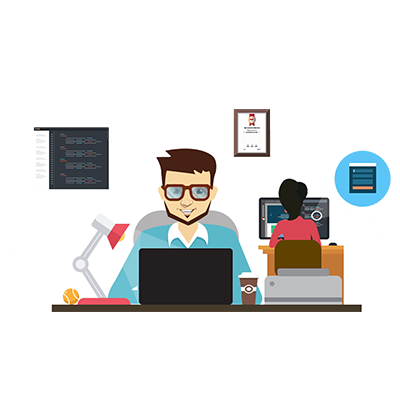
The frontend of a decentralized application represents what you see, and the backend represents the entire business logic. This business logic is represented by one or several smart contracts interacting with the underlying blockchain. The frontend, as well as files like a photo, a video, or audio, could be hosted on decentralized storage networks such as Swarm or IPFS. Traditional Web applications use HTML, CSS, and javascript or the like to render a webpage. This page interacts with a centralized database, where all the data is stored. When you use a service like Twitter, Facebook, Amazon, or Airbnb, for example, the webpage will call an API to process your personal data and other necessary information stored on their servers, to display them on the page. User ID and passwords are used for identification and authentication, with low levels of security, since personalized data is stored on the server of the service provider.
Traditional websites: Front End → API → Database.
Decentralized applications are similar to a traditional Web application. The frontend uses the exact same technology to render the page. It contains a “wallet” that communicates with the blockchain. The wallet manages cryptographic keys and the blockchain address. Public-key infrastructure is used for user identification and authentication. Instead of an API connecting to a database, a wallet so – ware triggers activities of a smart contract, which interacts with a blockchain:
Web3 compatible website:
Front End (including wallet) → Smart Contract → Blockchain.
In contrast to Web2 applications, Web3 applications need a connection to the blockchain, which is managed by a special application called “wallet.” It keeps a record of the private keys and blockchain address, which represents the unique 30 identities and point of reference. Without a so ware that manages our digital identity, we will not be able to interact with the blockchain. The Web3, therefore, builds on the current Web2 stack and introduces additional elements on an application level. In the backend, the Web3 adds a whole new infrastructure layer for decentralized applications to interact with – the decentralized protocol stack. Decentralized apps need to have a component that manages a user’s private keys, with which one can sign transactions on the state layer, the blockchain (read more: Token Security – Cryptography).
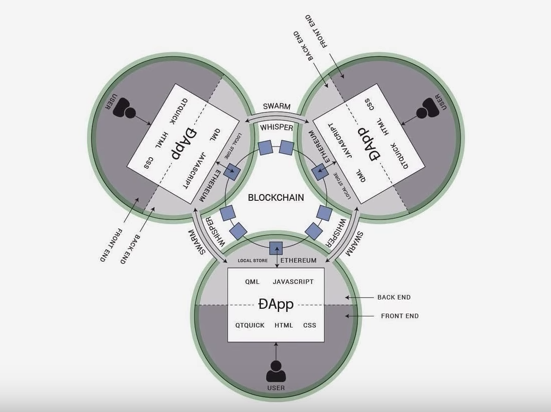
Illustration of a DApp that uses a blockchain with smart contracts combined with the pillars of Swarm and Whisper.
Source: Ethereum Stack exchange
Trending Technologies 2020

List of services for which a Notary Public can charge fees?
There are different kinds of policies and regulations for every state regarding the fees of the notaries and services a Notary Public can charge. Some of the common services that notaries can charge for are as follows: Copies Notaries, for fixed fees, can also certify...

Smart contracts: are they here to stay?
Smart contracts are based on blockchain technology; thus, we can say that they inherit all the properties of blockchain technology. There are many benefits of smart contracts. One key benefit of the smart contract is the absence of the middle man. The smart contract...

Blockchain & E-signing
Contracts between clients, partners, workers, governments, and administrative authorities are the basis of any business. They are an essential part of any business, be it sales contract, job offer letters, appointment letters, non-disclosure agreements, or purchase...

Notary Public: The Short Answer
A notary public is an officer of the state who acts as an impartial and credible witness for signing essential documents. Depending upon the jurisdiction, the role of a notart public includes administering oaths as well as other official capacities. Generally, the...

How to Share a SAFEBOX document?
SAFEBOX is a digital platform that allows easy linking to the blockchain network. Users can upload, share, and verify the documents placed in the blockchain network. Sharing a document in SAFEBOX is as easy as any other platform. All you need is a document and the...
Our Latest Updates


Notary Public: 5 Tips to Increase Productivity
A notary public's job is a complex one. The work involves witnessing and taking care of relevant documents. As there is much paperwork required in this job, taking care of everything can be a little overwhelming. This is where blockchain comes into the picture....
Why do you need MetaMask?
MetaMask is a cryptocurrency wallet that allows you to interact with the Ethereum enabled distributed applications(Dapps) without having the need to run the Ethereum node. It is available as a browser extension that allows smooth interaction between the web...
SAFEBOX Pricing
SAFEBOX makes use of cloud storage and blockchain technology to facilitate the work related to records. Our platform takes care of signing agents, attorneys, medical professionals, title companies, automobile dealers, escrow companies, and many more who need to store...